- Zuba Realms
- Posts
- Thundarr the Barbarian: The Forgotten 80s Cartoon That Deserved Better
Thundarr the Barbarian: The Forgotten 80s Cartoon That Deserved Better
Before He-Man, there was Thundarr

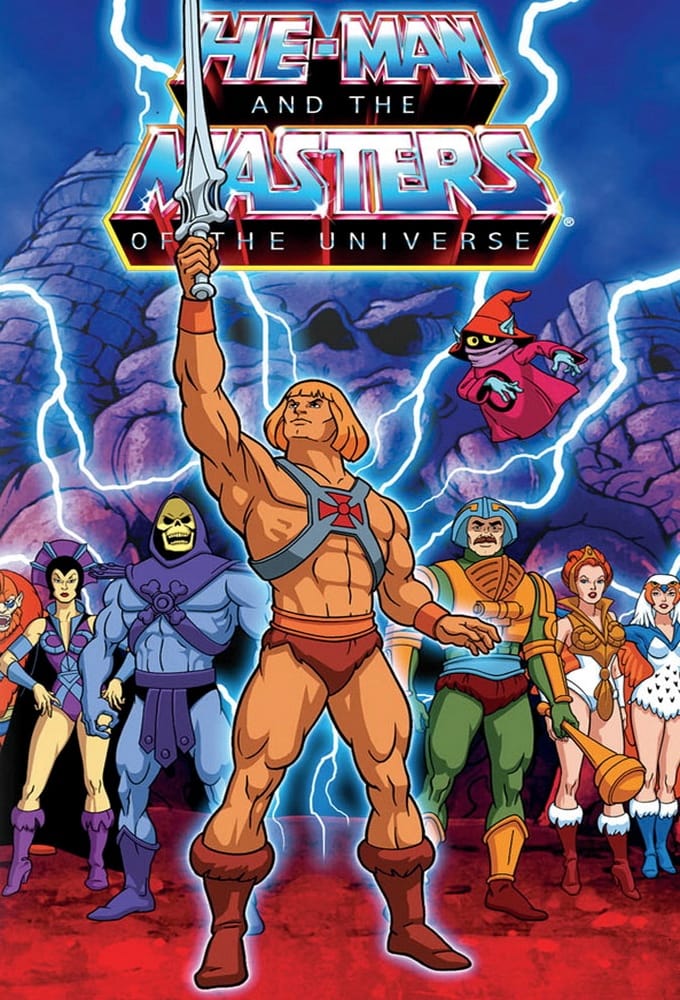
Before He-Man ever raised the Power Sword and declared "I have the power!", there was another loincloth-wearing barbarian swinging a magical blade across Saturday morning television. His name was Thundarr, and he deserved so much more than history gave him.
Thundarr the Barbarian debuted in 1980, a full three years before He-Man and Masters of the Universe became a cultural phenomenon. Both shows offered hokey fantasy adventures with generous helpings of sci-fi. Both got canceled after two seasons. But while He-Man spawned an empire of toys, movies, and endless reboots, Thundarr faded into obscurity.
That's a crime against barbarian justice, and it's time we talked about it.
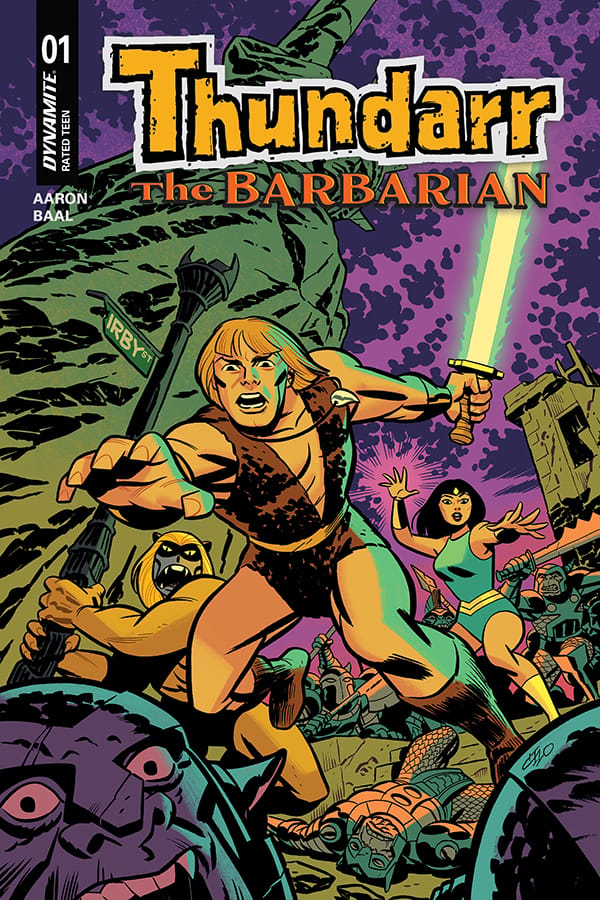
With a new Thundarr the Barbarian comic series hitting shelves in 2026, there's never been a better moment to revisit this criminally underrated gem. Because underneath all that 80s cheese lies some genuinely spectacular world-building that puts most modern fantasy to shame.
Post-Apocalyptic Sword and Sorcery Done Right
Let's be honest upfront: Thundarr the Barbarian is absurdly cheesy. Our hero yells "Demon dogs!" and "Lords of Light!" every three seconds. The violence is cartoonishly neutered—Thundarr's sun sword rarely actually hits anyone, turning him into more of a grappler than a swordsman. The villains twirl their metaphorical mustaches with gleeful abandon.
But here's the thing: beneath that 80s Saturday morning veneer lives a world that actually makes sense.
The show takes place on Earth in the year 3994. Two thousand years earlier, in 1994 (which must have seemed impossibly distant in 1980), a "runaway planet" careened past Earth, splitting the moon in two and triggering an apocalyptic event that obliterated civilization.
The result? A world of "savagery, super science, and sorcery."
If that doesn't sound like one of the most metal fantasy settings ever conceived, I don't know what to tell you. This is post-apocalyptic sword and sorcery before that became a trendy genre mashup. This is Mad Max meets Conan the Barbarian meets Star Wars, decades before similar concepts became commonplace.
A Trio Worth Remembering
Our heroes are a clear riff on the original Star Wars crew, but they work beautifully in their own right:
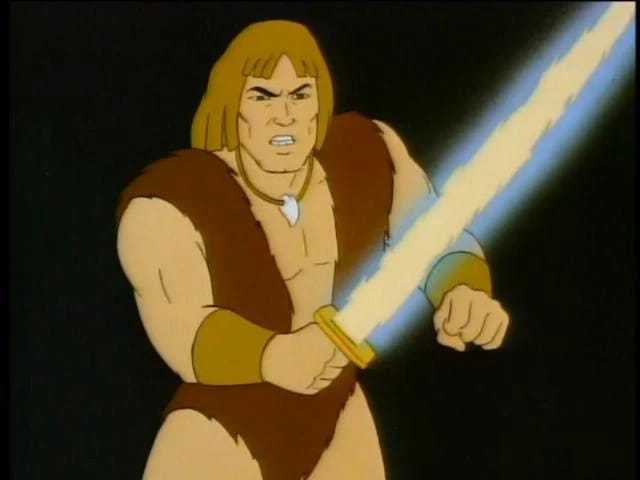
Thundarr wields a sun sword—a humming, glowing blade that's basically a lightsaber for barbarians. He's brave, righteous, and shouts catchphrases with the enthusiasm of a professional wrestler.
Thundarr
Princess Ariel (no, not that one) is a sorceress and the brains of the operation, using magic to complement Thundarr's brawn.

Princess Ariel
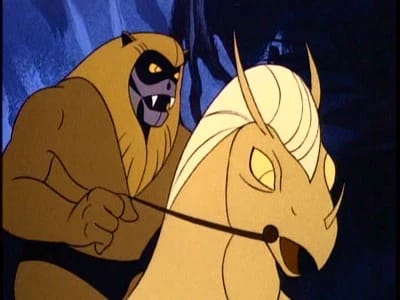
Ookla the Mok is a giant furball who communicates in growls and provides the muscle. He's basically Chewbacca if Chewbacca was even more feral and angry.
Ookla the Mok
Together, they wander this ruined Earth, helping people and fighting evil wizards. It's a simple formula, but the execution is what matters.
That First Episode Though
The series premiere remains one of the most audacious opening episodes in Saturday morning cartoon history. The villain is Gemini, an evil cyborg wizard with multiple faces. His plan? Send a possessed Statue of Liberty to attack our heroes in the jungle ruins of New York City.
Read that again: Thundarr fights the Statue of Liberty in episode one.
Oh, and there are also mutated humanoid rats riding motorcycles, because why the hell not?
This is the kind of gonzo creativity that defined the show. Each episode featured Thundarr and company exploring recognizable but transformed landmarks—the Hollywood sign, the Golden Gate Bridge, Mount Rushmore—all reclaimed by nature and twisted by magic. It's geography as a storytelling tool, grounding the fantasy in a recognizable (if devastated) reality.
The Dream Team Behind the Scenes
The show's creative ambition makes perfect sense when you look at who was involved. Thundarr the Barbarian had an absolutely stacked roster of talent:
Writers Steve Gerber and Roy Thomas—legendary comic book scribes who understood how to build mythology and character within episodic constraints.
Artists Alex Toth and Jack Kirby—yes, that Jack Kirby, co-creator of basically every major Marvel character you love. The King of Comics himself designed characters and concepts for this Saturday morning cartoon.
Producers Joe Ruby and Ken Spears—the Hanna-Barbera veterans who created Scooby-Doo, Where Are You!
This wasn't some thrown-together toy commercial. This was serious creative talent bringing their A-game to children's programming, treating young audiences with respect by building a world that held together.
Why Thundarr Deserves a Second Chance
The entire series is streaming free on Tubi right now, which means there's no excuse not to check it out. Yes, it's dated. Yes, it's cheesy. But it's also imaginative, earnest, and built with genuine craft.
More importantly, Thundarr the Barbarian represents a road not taken in fantasy animation. While He-Man became a merchandise machine, Thundarr was content to be a weird, ambitious adventure show that prioritized world-building and creativity over toy sales.
In 2026, when everything old is new again and franchises from decades past get revived constantly, Thundarr deserves his moment. The new comic series is a start, but imagine what modern animation could do with this concept. Imagine a Thundarr series with the production values of Castlevania or Arcane, one that leans into the post-apocalyptic sorcery with full creative freedom.
The bones are there. The world is fascinating. The premise is rock-solid. All it needs is someone willing to give this forgotten barbarian another shot at glory.
A Barbarian for the Ages
Thundarr the Barbarian ran for just two seasons and 21 episodes. That's it. A blink in television history. But what it accomplished in that brief run—the world-building, the imaginative character designs, the sheer audacity of its premise—deserves recognition.
He-Man may have won the toy wars, but Thundarr had the better world. He-Man's Eternia was a generic fantasy realm with a vaguely sci-fi castle. Thundarr's Earth was our world, twisted and transformed, full of recognizable landmarks turned alien. It was our future, not some distant planet, which made it inherently more compelling.
So if you're looking for something to watch that's simultaneously dated and ahead of its time, something that embraces its cheese while building genuine lore, fire up Tubi and give Thundarr a chance.
You'll get barbarians, mutants, evil wizards, post-apocalyptic landscapes, and a hero who defeats his enemies by yelling "Lords of Light!" while throwing them around instead of stabbing them.
That's not a bug. That's a feature.
And it's time we appreciated it.